Daily movement
Calathea leaves naturally change angle between day and night, but they should not remain tightly curled.
Symptoms on popular plants
Calathea leaves curl with drought, hot dry air, cold exposure or light that is too intense.
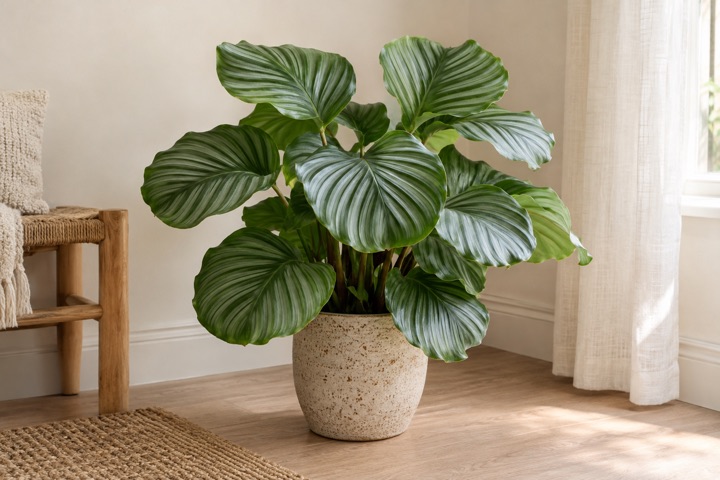
Calathea leaves naturally change angle between day and night, but they should not remain tightly curled.
A dry root ball curls leaves, but damaged wet roots can produce the same symptom.
A heater, cold glass or harsh sun can trigger a rapid leaf response.
More useful detail
Curling after drought that eases following proper watering supports thirst more than a root ball that remains wet.
Natural evening movement is not a problem when leaves reopen by day and their margins stay healthy.
Problem
Compare leaf position in the morning and evening.
Check moisture throughout the root ball and the distance from heaters, glass and direct sun.
Adjust one factor and observe the response for several days.
Observation
Do not add water to a persistently wet pot simply because the leaves are curled.
Florli
Plant
Calathea: curling leaves and steady moisture
Calathea care guide covering light, watering, soil, seasonal changes and the warning signs worth checking.
Read the guide →
Library
Houseplant problems
Identify common houseplant symptoms, pests and watering problems. Start with observation instead of treating by guesswork.
Read the guide →
Feature
Plant and garden journal
Record watering, feeding, mowing, planting, pruning and your own notes in a history attached to the right plant or place.
Read the guide →

From advice to your own plan
Add a plant or garden area, log completed care and observations, and keep the next useful tasks together in one plan.

Florli is now available for Android.The iPhone version is coming soon.
Prepared by Florli. Reviewed October 15, 2026. This is general guidance. Sources are listed with each guide, and every decision should reflect the species, location, weather and the plant’s current condition. How Florli creates its guides.