White tissue
It contains less chlorophyll than the green part of the leaf, so it dries and scorches more easily.
Symptoms on popular plants
White tissue has little chlorophyll and is more vulnerable to harsh sun, drought and root stress.
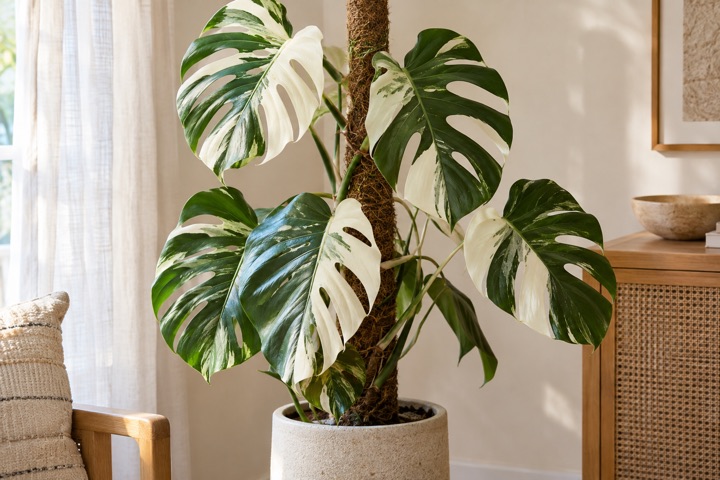
It contains less chlorophyll than the green part of the leaf, so it dries and scorches more easily.
A crisp tan margin fits drought stress or harsh light better than wet rot.
Green tissue, roots and the next leaf reveal more than one damaged white patch.
More useful detail
Browning confined to white sectors, with firm roots and healthy green tissue, is usually physiological or cosmetic.
Soft dark marks spreading into green tissue may have another cause and call for a moisture and root check.
Problem
Photograph the edge of the brown area and compare it several days later.
Check moisture through the root ball and the leaf's distance from glass and heat.
Stabilize watering and light without removing healthy green tissue.
Observation
Do not remove healthy green tissue simply to eliminate cosmetic browning.
Florli
Plant
Monstera Albo Variegata: white variegation without scorch
Monstera Albo Variegata — light, watering, support, leaf maturity and warning signs in year-round care.
Read the guide →
Library
Houseplant problems
Identify common houseplant symptoms, pests and watering problems. Start with observation instead of treating by guesswork.
Read the guide →
Feature
Plant and garden journal
Record watering, feeding, mowing, planting, pruning and your own notes in a history attached to the right plant or place.
Read the guide →

From advice to your own plan
Add a plant or garden area, log completed care and observations, and keep the next useful tasks together in one plan.

Florli is now available for Android.The iPhone version is coming soon.
Prepared by Florli. Reviewed October 15, 2026. This is general guidance. Sources are listed with each guide, and every decision should reflect the species, location, weather and the plant’s current condition. How Florli creates its guides.