Light
Bright, indirect light without long exposure to harsh sun.
Florli plant library
Phalaenopsis. A clear pot makes the roots easier to inspect, but root color alone does not replace a moisture and health check.
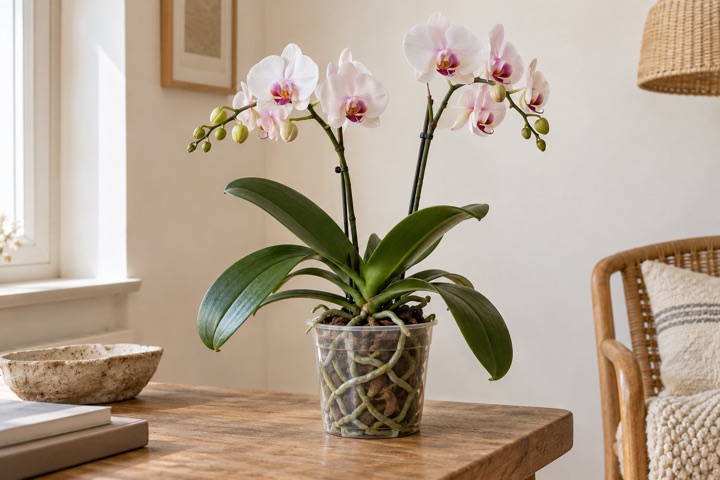
Bright, indirect light without long exposure to harsh sun.
Use the roots and bark moisture as clues; never leave water in the outer pot or crown.
Coarse orchid bark that leaves air around the roots.
More useful detail
Do not cut the flower spike automatically. First check whether it remains green or is drying, and consider the health of the whole plant.
Repot when bark has broken down, drainage is poor or healthy roots no longer fit comfortably in the container.
Plant
Look at the roots and bark through the pot.
Water thoroughly, then let all excess water drain.
After flowering, inspect the flower spike and leaves before pruning.
Observation
Watering frequency changes with light, temperature, pot size and potting mix. Use any interval as a reminder to check the plant, not as an automatic watering day.

From advice to your own plan
Add a plant or garden area, log completed care and observations, and keep the next useful tasks together in one plan.
Coming soon to the App Store and Google Play.Prepared by Florli. This is general guidance. Sources are listed with each guide, and every decision should reflect the species, location, weather and the plant’s current condition.